Why Science Has Failed the Paranormal Evidence—And What the Data Actually Shows
Parapsychology evidence has been ignored, suppressed, and misrepresented by institutional science for over a century. Here is the documented record of what the research actually shows—and why the failure to engage with it is a problem for science, not for the data.
Parapsychology evidence has been systematically ignored by institutional science for over a century—not because the data is weak, but because the data challenges the foundational assumptions of the materialist paradigm. Princeton's PEAR laboratory accumulated 2.5 million trials of mind-matter interaction data over 28 years. Dean Radin's Ganzfeld meta-analyses documented effect sizes peer reviewers could not explain away. The evidence exists. The failure is institutional, not evidential.
Science Has a Long History of Treating Anomalous Evidence as a Threat
"Real scientific endeavour does not dictate what 'should' be. It designs a sound protocol through which nature can reveal what is."—Brendan D. Murphy
Does science state that paranormal occurrences are impossible? Philosophically, it can no longer maintain that position—not if it wants to appeal to today's evidence. Evidentially speaking, many so-called paranormal phenomena have been irrefutably scientifically documented. The body of mainstream science has a consistent history of becoming quite hysterical in the face of information that doesn't conform to the dominant paradigm in operation at the time.
It is organised science that has often proved—and continues to prove—to be the biggest adversary to impartial discussion and consideration of novel data. This is alien to many people, given the way science has been mythologised as a totally dispassionate and objective enterprise. We think of the person in the lab coat as impartial and analytical, but they are just as motivated by emotion as anyone else—whether it be greed, fear, pride, or ambition. Degrees and PhDs don't produce immunity from emotional or intellectual prejudice.
Consider the treatment of pioneering scientist Wilhelm Reich in America in the 1950s. Had Reich hate-mongered? Had he called for harm of any kind? No. He had published his research into an energy he called "orgone," which challenged scientists' indoctrinated preconceptions about the nature of reality. The response was a government-sanctioned book burning and imprisonment. Robert Anton Wilson expressed his "horror and considerable indignation" at Reich's persecution: "I was astounded and flabbergasted that the US government was imitating its former enemy to the extent of actually burning scientific papers it found heretical."¹ The great Indian physicist J.C. Bose had himself noted the presence of an "unconscious theological bias" operating within the institution of science. Wilson would observe that "someone who knew only recent history and was unaware of the past might come to the conclusion that Science, not Theology, is the main enemy of free thought and free enquiry."¹
The term "skeptic" derives from the Greek skepsis—meaning examination and doubt, not knee-jerk denial. Somewhere along the way, organised skepticism confused closed-minded cynicism with rigorous inquiry. The one thing the best-known "skeptics" never seem to doubt, of course, is their own set of ontological assumptions.
Emotion, Not Evidence, Drives Most Institutional Resistance to Psi Research
Ray Hyman—a career disbeliever in psi—has admitted that "the level of the debate about psi during the past 130 years has been an embarrassment for anyone who would like to believe that scholars and scientists adhere to standards of rationality and fair play."² Scientific truth, in the context of psi phenomena, is determined primarily by nonscientific factors: cultural conditioning, rhetoric, ad hominem attack, politics, and competition for limited funding.
The "Scientific Priesthood" are, it is widely observed, driven not to perceive psi. Their egos have too much invested in an overarching paradigm that ruled psi impossible, and too much attachment to theories that depend on its non-existence. Physicist Brian Josephson has pointed out that "some scientists are especially prone to whip up emotion 'in the cause of science.'"³
Veteran parapsychologist Stephen Braude has documented what this looks like from the inside:
"Since dipping into the data of parapsychology, I have encountered more examples of intellectual cowardice and dishonesty than I had previously thought possible. I have seen how prominent scholars marshal their considerable intellectual gifts and skills to avoid honest inquiry. I have seen how intelligence…sometimes affords little more than complicated ways of making mistakes, entrenching people in views or opinions they are afraid to scrutinize or abandon."⁴
The hostility and closed-mindedness of institutional science toward paranormal evidence, I would argue, arises from cognitive dissonance—the internal conflict between hidden subconscious knowledge and consciously held belief structures, often imprinted early in life and rarely examined thereafter. "Skeptics" are uncomfortable when portions of their repressed knowledge are surfaced at a conscious level. The reaction is not intellectual. It is defensive.
Raymond Moody has identified the mechanism precisely: "'explanations' are not just abstract intellectual systems. They are also in some respects projects of the egos of the persons who hold them. People become emotionally wedded, as it were, to the canons of scientific explanation which they devise or adopt."⁵ Science can only perform its role properly when the ego is tempered and replaced with an unprejudiced search for truth—whatever it turns out to be.
The Education System Is Manufacturing the Resistance
One reason so many people maintain closed minds toward paranormal scientific evidence is that they never have an experience that forces a reassessment of everything they've assumed to be true. Their information grids contain no relevant or analogous data. But this is not simply a matter of personal experience—the education system is actively producing the resistance.
I was at a friend's house in Sydney in 2007 when his girlfriend's friend—a medical student at one of Sydney's universities—dropped by. Making conversation, I began to mention a friend of mine with impressive intuitive abilities. I noticed my voice catching in my throat, a strange reluctance to say what I was about to. I forged ahead regardless, saying something like "My friend is very intuitive…" at which point she cut me off and blurted: "I believe in science!"
She hadn't let me finish my sentence, and yet I had already offended her "scientific" sensibilities. She wasn't reacting to what I said but to what she feared I was about to say. She was not, in fact, a believer in science. She was a believer in scientism—the value judgement, as Moody defined it, "that other disciplines are worthwhile only insofar as they conform their techniques of investigation to those of the physical and biological sciences."⁵ William Tiller, a pioneering psi researcher and Stanford professor, has stated plainly that scientism is a corruption of the science craft.⁶
Thomas Kuhn noted in the late 1960s that "science students accept theories on the authority of teacher and text, not because of evidence."⁷ The same applies across disciplines. Accepting official doctrine is always an act of faith to some degree—but to precisely what degree, most of the indoctrinated never think to check.
The evidence on how parapsychology is treated in mainstream science education is documented and damning. A 1991 survey of 64 psychology textbooks published between 1980 and 1989 found that only 43 included any meaningful mention of parapsychology—a third ignored it entirely. Those that did include it presented a misleading and misrepresentative view of parapsychological research. A follow-up review of texts from 1990–1999 showed little improvement. A 2002 review found that a notorious career denialist—notorious for a near-pathological inability to report accurately on psychical research—was cited in 45% of that year's introductory psychology texts that mentioned parapsychology at all. Skeptical coverage was roughly twice as extensive as coverage favourable to the field. Factual errors and misleading framing persisted throughout.⁸
The education system is not failing to report on psi phenomena because the research is absent. It is failing because the research is inconvenient.
What the Materialist Framework Actually Is—and Why It Cannot Accommodate the Evidence
The established scientific worldview rests on Newtonian-Cartesian philosophical underpinnings that amount, essentially, to this: the universe is a deterministic machine with independent component parts; the body is also a machine; consciousness arises solely as an epiphenomenon of the brain; at death, since consciousness was merely a product of neurochemistry, the individual ceases to exist in any capacity.
This is not a conclusion derived from evidence. It is a faith-based belief system maintained by the calculated and unconscious omission of massive tracts of factual data. As the theosophist J.J. van der Leeuw observed:
"To conclude that the living individual is but a byproduct of the body…is as unthinking and unfounded as it would be to say that the artist is but a by-product of his violin since, when a string is missing, the possibilities of his artistic expression are changed forthwith."⁹
There is no room in this Newtonian-Cartesian worldview for mind-to-mind contact, interactive bioenergetic fields, or post-mortem consciousness—not because the evidence for these things is absent, but because the framework was constructed to exclude them. The mechano-materialistic outlook is, as Brian Weiss—prominent psychiatrist and pioneer in consciousness research—noted in the late 1980s, maintained by scientists who "refuse to examine and evaluate the considerable evidence being gathered about survival after bodily death and about past-life memories. Their eyes stay tightly shut."¹⁰
Never in any experiment has consciousness been created from inert matter. This is not a minor evidential gap. It is a structural failure at the foundation of the materialist model of mind.
What the Parapsychology Data Actually Shows
The parapsychology evidence that institutional science has failed to engage with is not anecdotal. It is peer-reviewed, replicated, and meta-analytically documented across multiple independent research programs over more than a century.
Princeton University's Engineering Anomalies Research (PEAR) laboratory, directed by Robert Jahn and Brenda Dunne, operated from 1979 to 2007. Over 28 years, the program accumulated approximately 2.5 million trials of human operator influence on random event generators. The results showed consistent, statistically significant deviations from chance across operators, laboratories, and experimental protocols—a composite effect size that, in any other field of research, would have been considered conclusive.¹¹ The program was shut down, not refuted.
The Ganzfeld protocol—a controlled method for testing telepathic communication under sensory reduction—has been meta-analysed repeatedly across independent research groups. Dean Radin's analysis of 2,549 Ganzfeld sessions across 88 experiments found a hit rate of approximately 32% against a 25% chance baseline—a modest but extraordinarily consistent effect that compounds across trials to produce odds against chance in the billions.¹² Ray Hyman—one of the most determined critics of psi research—was compelled to acknowledge after reviewing the Ganzfeld data that the effect was real, conceding that the studies met "adequate methodological standards."¹³
Rupert Sheldrake's morphic resonance research—including his telephone telepathy experiments, in which subjects correctly identified callers at rates far exceeding chance across blinded and randomised protocols—has produced peer-reviewed results that critics have consistently failed to replicate as failures.¹⁴ The standard response has been dismissal rather than engagement.
Social psychologist Daryl Bem at Cornell University published "Feeling the Future" in the Journal of Personality and Social Psychology in 2011—a peer-reviewed paper documenting statistically significant evidence of precognition across nine experiments with over 1,000 participants.¹⁵ The paper passed the journal's standard peer review. The institutional response was not replication and engagement but an attempt to change the rules of peer review retroactively.
Radin's broader survey of consciousness-related psi phenomena, published in The Conscious Universe (1997) and Entangled Minds (2006), documents the cumulative meta-analytic evidence across telepathy, precognition, psychokinesis, and remote viewing research—effect sizes that are small individually but, across the literature, constitute an evidential record no honest analyst can dismiss as noise.¹⁶
The parapsychology evidence does not require a single dramatic experiment. It requires an honest reckoning with a century of consistently positive results that the materialist model cannot account for.
This is precisely why the Consciousness Transition Model exists. The CTM is not built on belief—it is built on the systematic convergence of evidence streams that mainstream science has refused to integrate: NDE research, reincarnation studies, psi research, mediumistic testimony, cross-cultural consciousness mapping. The CTM provides the formal framework for what the evidence, taken seriously, demands: a model of mind in which consciousness is not produced by the brain and is not confined to it.
The Pattern Is Consistent and the Conclusion Is Unavoidable
Institutional science's failure to engage with paranormal scientific evidence follows a consistent pattern: initial dismissal, selective engagement with the weakest cases, demands for ever-higher standards of proof applied only to anomalous research, and—when the evidence survives all of that—silence. The PEAR laboratory closed. The Ganzfeld debate stalled. Sheldrake's morphic resonance is still not taught in universities. Bem's paper produced a methodological controversy rather than a replication program.
Thomas Kuhn's framework explains this clearly: anomalies are suppressed by normal science not because they fail to meet evidentiary standards but because they threaten the paradigm's stability. "As long as the status quo viewpoint contains an element of the arbitrary, novelty cannot be suppressed for very long."⁷ The novelty in question—that consciousness is not produced by the brain and can interact with physical reality in ways the materialist model cannot accommodate—has been accumulating evidence for over a century.
The increasing public engagement with psi phenomena and paranormal evidence does not reflect a decline in rational thinking. It reflects a rational response to a growing evidential record that institutional science has systematically failed to address. As Wilson observed, scientific method "eventually overrides individual prejudices, in the long run."¹ We appear to be in that long run.
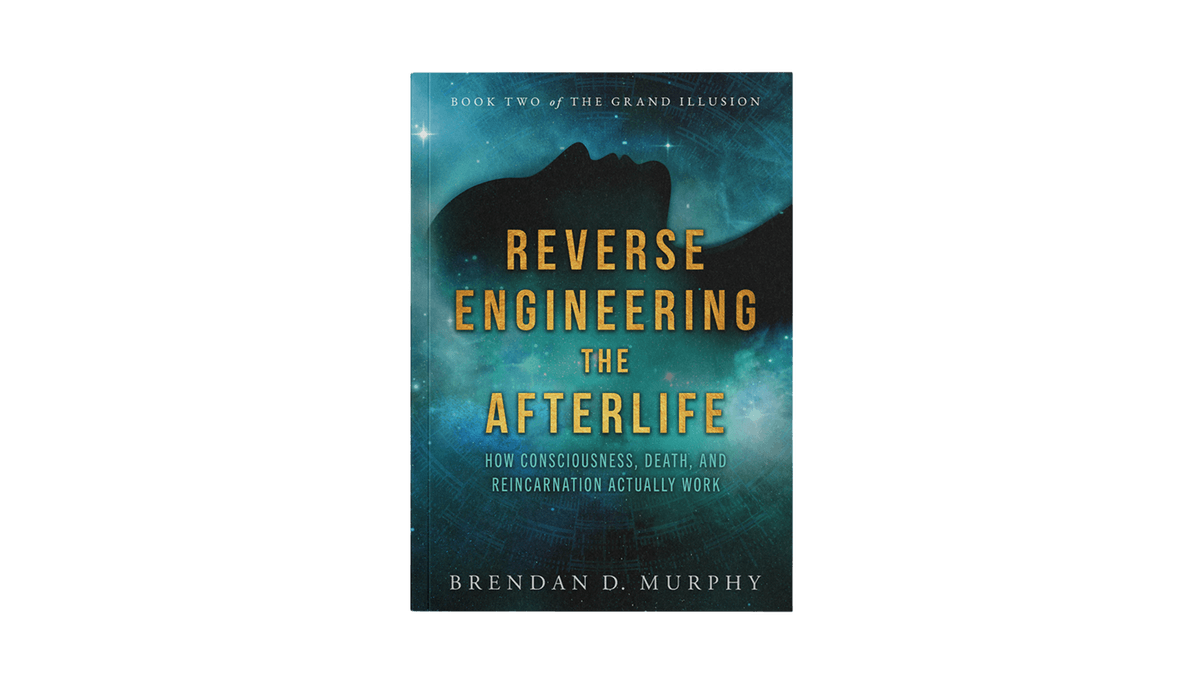
The full architecture of what the evidence actually implies—about consciousness, about death, about the nature of post-mortem experience—is mapped in the Consciousness Transition Model and developed in detail in Reverse Engineering the Afterlife.
"The level of the debate about psi during the past 130 years has been an embarrassment for anyone who would like to believe that scholars and scientists adhere to standards of rationality and fair play."—Ray Hyman, critic of parapsychology
Frequently Asked Questions
Why does science reject paranormal evidence?
Institutional science's rejection of paranormal evidence is driven primarily by paradigmatic investment rather than evidential assessment. The materialist model of consciousness—in which the brain produces mind and nothing exists beyond the physical—structurally cannot accommodate psi phenomena. Scientists whose careers, reputations, and theoretical frameworks depend on that model are therefore motivated to dismiss anomalous data rather than engage with it. Thomas Kuhn documented this pattern across the history of science: anomalies are suppressed until the weight of evidence makes the paradigm untenable.
Is there peer-reviewed evidence for psi phenomena?
Yes. Princeton's PEAR laboratory accumulated 2.5 million trials of human operator influence on random event generators over 28 years, with consistent statistically significant results. Dean Radin's Ganzfeld meta-analyses across 88 experiments documented a hit rate of approximately 32% against a 25% baseline. Daryl Bem published a peer-reviewed paper in the Journal of Personality and Social Psychology documenting precognition effects across nine experiments with over 1,000 participants. The parapsychology evidence is peer-reviewed, replicated, and meta-analytically documented. The failure to engage with it is institutional, not scientific.
What is scientism and how does it differ from science?
Scientism is, as Raymond Moody defined it, "a value judgement that other disciplines are worthwhile only insofar as they conform their techniques of investigation to those of the physical and biological sciences." It is a philosophical position masquerading as a methodological standard. Genuine science designs protocols through which nature can reveal what is—it does not dictate in advance what is permitted to exist. Scientism does the latter. William Tiller, a Stanford professor and psi researcher, described scientism plainly as a corruption of the science craft.
Why is parapsychology not taught in universities?
The exclusion of parapsychology from mainstream science education is documented and deliberate. A 1991 survey of 64 psychology textbooks found a third ignored parapsychology entirely; those that covered it presented misleading and factually inaccurate accounts. Reviews of 1990s and 2002 texts showed the situation had worsened rather than improved, with known denialists cited more frequently than the primary research literature. The exclusion reflects paradigmatic gatekeeping rather than evidentiary assessment—the research exists and is substantial; it is not being reported accurately.
What is the Consciousness Transition Model's relationship to paranormal evidence?
The Consciousness Transition Model is built on the systematic convergence of evidence streams that mainstream science has refused to integrate: near-death experience research, reincarnation studies, psi phenomena research, mediumistic testimony, and cross-cultural consciousness mapping. It provides the formal theoretical framework for what this evidence, taken seriously, implies: that consciousness is not produced by the brain, is not confined to it, and persists beyond the Biological Disengagement Event at death. The CTM does not require belief in the paranormal. It requires intellectual honesty about what the data shows.
Does the public believe in the paranormal because they are irrational?
No. Growing public engagement with paranormal phenomena reflects a rational response to a growing evidential record that institutional science has systematically failed to address. As Brendan Murphy argues, it represents the maturation of scientific thinking rather than its decline—people reasoning from their own experiences and from the available evidence rather than deferring to institutional authority that has repeatedly failed to engage honestly with anomalous data.
Explore Further
→ The Consciousness Transition Model — The first structured, cross-tradition map of how consciousness moves through post-mortem states.
→ What NDE Research Actually Shows — The parallel evidential record from near-death experience research.
→ Psychokinesis: What the US Military's Research Actually Found — The documented evidence for mind-matter interaction.
→ The Mystical Experience: First-Person Evidence for the Nonlocality of Consciousness — What direct experience reveals about the nature of mind.
→ The Grand Illusion — Book 1: the foundational research into consciousness, psi, and the failure of the materialist model.
→ Reverse Engineering the Afterlife — Book 2: the full CTM account.
References
- Wilson, R.A. The New Inquisition. Falcon Press, 1986.
- Hyman, R. Cited in Radin, D. The Conscious Universe. HarperOne, 1997.
- Josephson, B.D. Cited in Murphy, B.D. The Grand Illusion—Book 1.
- Braude, S. The Limits of Influence: Psychokinesis and the Philosophy of Science. University Press of America, 1991.
- Moody, R. The Last Laugh. Hampton Roads, 1999.
- Tiller, W. Cited in Murphy, B.D. The Grand Illusion—Book 1.
- Kuhn, T.S. The Structure of Scientific Revolutions. University of Chicago Press, 1962.
- Murray, C.D. & Wooffitt, R. (2010). Survey of parapsychology coverage in psychology textbooks. Journal of Parapsychology. See also: Roig, M. et al. (1991). Psychological Reports, 68(1), 315–320.
- van der Leeuw, J.J. The Conquest of Illusion. Knopf, 1928.
- Weiss, B. Many Lives, Many Masters. Simon & Schuster, 1988.
- Jahn, R.G. & Dunne, B.J. Margins of Reality: The Role of Consciousness in the Physical World. Harcourt Brace, 1987. See also: Nelson, R. et al. (1987). Foundations of Physics, 17(3), 261–281.
- Radin, D. The Conscious Universe: The Scientific Truth of Psychic Phenomena. HarperOne, 1997. 89–95.
- Hyman, R. (1994). Anomaly or artifact? Comments on Bem and Honorton. Psychological Bulletin, 115(1), 19–24.
- Sheldrake, R. & Smart, P. (2003). Videotaped experiments on telephone telepathy. Journal of Parapsychology, 67(1), 187–206.
- Bem, D.J. (2011). Feeling the future: Experimental evidence for anomalous retroactive influences on cognition and affect. Journal of Personality and Social Psychology, 100(3), 407–425.
- Radin, D. Entangled Minds: Extrasensory Experiences in a Quantum Reality. Paraview Pocket Books, 2006.
Brendan D. Murphy
Reverse Engineering the Afterlife
The full CTM account—post-mortem mechanics, substrate independence, and the structural map of what comes next.
Pre-Order Now →