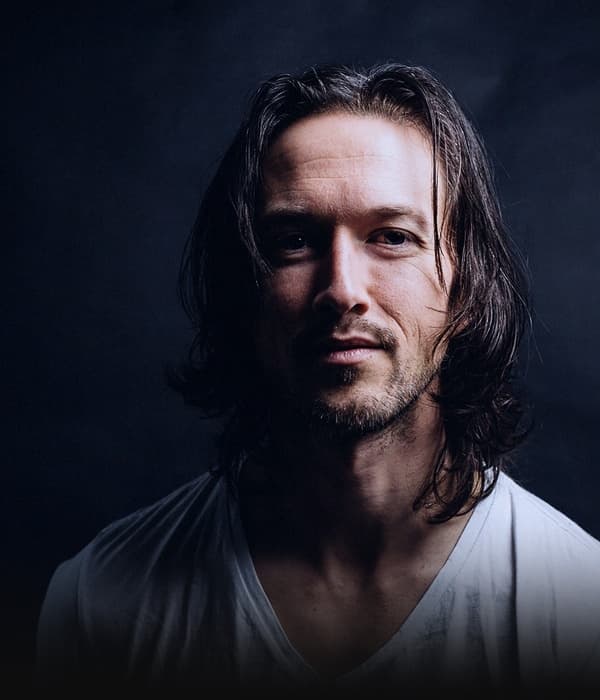
Brendan D. Murphy is a consciousness researcher, systems thinker, and the author of The Grand Illusion: A Synthesis of Science and Spirituality—a 600-page cross-disciplinary investigation into consciousness, the dynamics of nonlocal perception and communication, and the philosophical and scientific foundations of reality. The work laid the intellectual groundwork for his later formulation of the Consciousness Transition Model (CTM).
He works independently of any academic institution, religious tradition, or ideological programme. This is not a limitation—it is the condition of his work. The research questions he pursues require the freedom to follow evidence across disciplines that do not currently speak to each other, and to reach conclusions that institutional contexts would not permit.
Brendan is based in México. His work has been reviewed in New Dawn Magazine, Nexus, and consciousness-adjacent research outlets. He has been endorsed by PMH Atwater, Anthony Peake, Eileen McKusick, Sol Luckman, Alec Zeck, Richard Hoagland, and Dawn Lester.
The investigation did not begin with a personal loss, religious belief, or a near-death experience. It began with a question that most people treat as unanswerable and then stop asking: what actually happens to consciousness when the body dies?
What Brendan found, when he began taking the question seriously, was not a void of evidence. He found an excess of it—fragmented across disciplines that refused to communicate. Clinical NDE research accumulated in medical journals without connecting to the esoteric literature that had described the same structural territory for centuries. Depth psychology mapped post-mortem imagery without engaging the empirical datasets. Vedanta, Neoplatonism, and Theosophy each described layered post-mortem architectures that structurally converged—but in incompatible symbol sets that made the convergence invisible.
The work of the first decade was synthesis: reading across all of it, building the conceptual infrastructure needed to hold it together, and identifying where genuine structural agreement existed beneath divergent cultural imagery. The result was The Grand Illusion—not a survey, but a coherent argument built from over a thousand primary sources.
The work of the second phase was more specific: developing the structural map and operationalising it—building a named, testable framework that could account for the data across NDE research, regression reports, and cross-tradition structural analysis without relying on the myth-language of any of them. That framework is the Consciousness Transition Model, introduced in Reverse Engineering the Afterlife.
The central methodological commitment is structural analysis across traditions—what Brendan calls the Cross-Tradition Structural Map. The method operates on a distinction that most comparative work collapses: the distinction between content (what a tradition says) and structure (what it describes at the functional level). Two traditions can use incompatible symbol sets to describe the same functional state. Two traditions can use superficially similar language to describe entirely different things.
The method asks: stripped of culturally generated imagery, what is actually being described? What sequence of transitions? What phenomenological characteristics? What constraints and affordances does the consciousness encounter at each stage? When these questions are asked systematically across Vedanta, Gnosticism, Neoplatonism, Theosophy, Tibetan Buddhist eschatology, and the clinical NDE literature, structural agreement emerges that is too consistent to be coincidental and too specific to be explained by cultural diffusion.
The secondary methodological commitment is empirical grounding. The CTM is not speculative cosmology—it is a framework that must account for the data from thousands of independently reported NDE accounts, multiple esoteric traditions, thousands of methodologically robust past-life regression cases, and the accumulated findings of five decades of systematic NDE research by Moody, Ring, Sabom, Greyson, van Lommel, Atwater, and others. Where the framework conflicts with the data, the framework must change. This is what distinguishes the CTM from theological afterlife doctrine: it is falsifiable, and deliberately so.
The question of what happens at death is not an abstract philosophical puzzle. It is the question that underlies every significant human decision about how to live—and it is the question that contemporary culture has the least honest relationship with. The materialist answer (“nothing, you simply cease”) is asserted with a confidence that the evidence does not support. The religious answers are trusted by fewer people each decade. The New Age alternatives offer comfort without rigour.
Brendan's work provides a fourth option: a framework built from evidence, capable of withstanding sceptical scrutiny, that does not require faith in any tradition's cosmology and does not collapse into the reductionism that has failed to account for the data.
The practical stakes are significant. How a culture understands death determines how it understands identity, continuity, meaning, and obligation. A framework that maps post-mortem architecture with structural precision—rather than mythological assertion or materialist denial—is not a luxury of intellectual curiosity. It is the most important map that the twenty-first century is not yet reading.