One-off session · NDE · OBE · Shared-death

Making sense
of your experience

A single 90-minute session for people who have had a near-death, out-of-body or shared-death experience and want to understand what happened, and why it looked the way it did.

Brendan places your experience on the Consciousness Transition Model, his cross-tradition map of the states consciousness passes through when it disengages from the body, then sends you a written summary of where it sits.

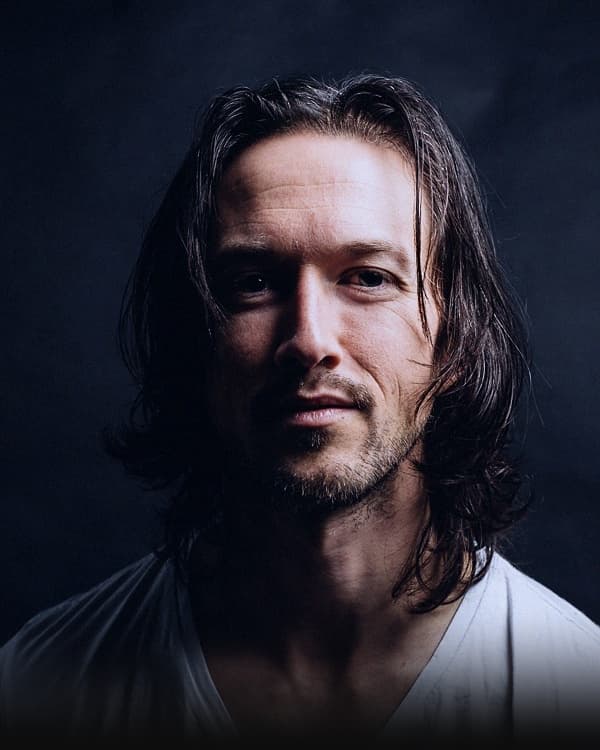
Brendan D. Murphy
Format
Live video call, one to one
Length
90 minutes
Afterwards
A written summary placing your experience on the CTM, within 48 hours
Price
US$245, paid when you book
Who it's for

Most published near-death accounts follow a familiar script: the tunnel, the light, the relatives, the life review. Many experiences don't. When yours didn't, the mismatch is often what leaves people stuck, more than the experience itself.

01

The void

No light, no figures, no direction: darkness or nothingness, sometimes terrifying, sometimes strangely peaceful. Many people only learn later that the void is a recognised kind of near-death experience.

Why was there nothing?
02

Distressing or hellish NDEs

Judgement, threat or hell-like imagery, often in people who can't see what they did to deserve it. The CTM reads that imagery very differently from a verdict.

Why me?
03

Dissolving into the light

Merging with light or with consciousness itself and losing the sense of a separate self, with no tunnel or beings at all. Brendan's research calls these "NDEs of the One".

Was mine even an NDE?
04

Out-of-body experiences

Seeing your body from outside, during an emergency, in sleep or out of nowhere, and not knowing whether it was real, a dream or something in between.

Was it real?
05

Shared-death experiences

Seeing light, a presence or a departure at someone else's death, sometimes alongside other people in the room.

Did I share it?
06

Unity experiences, with no brush with death

The same dissolution into oneness, arriving through meditation, grief, a panic attack, a psychedelic or nothing identifiable at all. People in this position often end up reading NDE accounts, because nothing else describes the scale of it. The session is for you too.

Why does this sound like an NDE?
Why this session exists

Support groups listen. Therapy continues. Neither explains.

Peer groups run by IANDS and ACISTE give experiencers somewhere to be heard, and by policy they don't interpret anyone's experience. Therapists who work in this area offer ongoing support, usually without a model of what the experience was. Both matter. Neither gives you one clear account of what happened and why yours looked different.

Religious frameworks tell you what it meant before you've described it. Materialist frameworks tell you it meant nothing. New Age frameworks tell you it means whatever you like. None of them show you the structure underneath.

64%

of near-death experiencers sought help processing the experience. Fear of disbelief and of being seen as mentally ill were the most common barriers.

Pehlivanova, McNally, Funk & Greyson, Psychology of Consciousness (2025), 167 experiencers

26%

of experiencers said they got help making sense of their NDE.

ACISTE, “What Kind of Support Do Near Death Experiencers Need?” (2020)

How the model reads an experience

Why two experiences can look nothing alike

The Consciousness Transition Model is built from twenty-three years of research across near-death studies, regression data and the world's contemplative traditions. It treats what you saw as information about where you were on the map, not as a literal photograph of a place.

It is offered as one explanation, which you are free to take or leave. The session gives you a coherent way to think about what happened, not a belief to adopt.

What experiencers ask

If you've asked one of these, you're in the right place

These are questions people post, often anonymously, in near-death forums and support groups, close to their own words. The short answers come from Brendan's research. In a session he works through yours.

Any experience

“Am I going crazy? Why can't I talk to anyone about this?”

You are not, and you are far from alone. In a 2025 University of Virginia study of 167 experiencers (Pehlivanova, McNally, Funk and Greyson), 64% had looked for help making sense of their near-death experience. The most common reasons people held back were fear of not being believed and fear of being thought mentally ill, at 28% each. Keeping quiet is the normal response, not a sign that something is wrong with you.

The void

“I didn't see a light or a tunnel. I saw total darkness. What does that mean?”

It doesn't mean something went wrong. The void is a recognised kind of near-death experience: Bruce Greyson and Nancy Evans Bush list it as one of the three main types of distressing NDE, and many peaceful accounts include it too. In the CTM, the familiar script of tunnel, light and relatives is interface imagery, the mind rendering a deeper transition in symbols it already knows. A void is what that transition can look like with little or no imagery laid over it.

The void

“Was the void nothing, or the opposite of nothing?”

Experiencers argue about this a lot. Some call the void a waiting room, some an empty nothing, others closeness to the source of everything. The CTM places its deepest form at the base of its map of reality: the ground before any form appears, pure potential. That is why the same void can feel like annihilation to the personality and like coming home to the person underneath it. Whether yours was that, or an earlier in-between state, is something a session works out from what you describe.

Distressing NDEs

“Why was I shown hell? I haven't done anything that bad.”

A hellish experience is not a verdict on you. Research reviewed by Nancy Evans Bush and Bruce Greyson has not found that the people who have them are worse people, or more or less religious, than anyone else. In the CTM, flames, judges and threatening figures are imagery drawn from culture and expectation, and these settings are thought-responsive: they amplify the fear that is already there. In recorded cases, including Janine Charrat's, the frightening scene changed when the person changed their intention.

Distressing NDEs

“Does a hellish NDE mean that's where I'll go when I die?”

Nothing in the research suggests a distressing NDE is a preview of a fixed fate. The CTM treats these environments as states, not places: they are shaped by fear, expectation and unresolved material from the life, which is why they can change, and in many accounts they changed during the experience itself. Understanding what you saw is often what loosens its hold.

Distressing NDEs

“My life review felt like being judged. Was it?”

It often feels that way. The CTM reads the life review as memory reintegration: the life replayed, often from other people's point of view, so it can be brought together into one coherent whole. The harshness people feel usually comes from their own judgement rather than an outside one, which is also what many experiencers conclude for themselves afterwards.

Out-of-body

“Was my out-of-body experience real, or a dream?”

Most people hold both possibilities at once, and you don't have to pick one before you understand it. The CTM describes an OBE as perceptual decoupling: awareness carrying on apart from the body's ordinary senses. Some OBEs include details that were later checked and found accurate, which researchers call veridical perception. Others mix that clear perception with dream-like imagery. The session looks at which features of yours point which way.

Out-of-body

“Can you get stuck out of your body? Why didn't I see a silver cord?”

The fear of not getting back is one of the most common worries after an OBE. In the accounts, it is usually the fear itself that makes return feel blocked, and people describe returning once they calm down or simply intend to. The silver cord appears in some traditions and some accounts and not in others. In the CTM it is interface imagery, so not seeing one says nothing about whether you were still connected to your body.

Shared-death

“I saw a light when my mother died. Did I share her death?”

You may have. Shared-death experiences are reported by relatives, friends and hospice staff, sometimes by several people in the room at once, which is hard to put down to one grieving person's imagination. Raymond Moody collected many of them in Glimpses of Eternity (2010). In the CTM, consciousness is not sealed inside one skull, so the people closest to someone who is dying can sometimes perceive part of their transition.

At the bedside

“My dad had dementia, but he was suddenly clear before he died. What was that?”

That is very likely terminal lucidity: an unexpected return of clarity in someone with severe dementia or brain damage, usually hours or days before death. Michael Nahm and Bruce Greyson found 81 case references across 250 years of medical literature. Families often only recognise it afterwards. It is hard to explain if the brain alone produces the mind, and it is one of the findings the CTM draws on.

Unity experiences

“It felt like an NDE, but I wasn't dying. What happened to me?”

Dissolving into oneness can arrive through meditation, grief, a panic attack, a psychedelic or nothing at all, and people describe it in almost the same words as NDE accounts of merging with the light. In the CTM that overlap is expected: the deep layers of consciousness a dying person passes through can also be reached while the body is fine. The session reads your experience on the same map as an NDE.

Your question isn't here?

Most experiences don't fit a list. Bring yours to the session, in your own words.

Book a Session
How the session works
01

Book and pay

Choose a time below and pay US$245 through Cal.com. The booking form asks a few questions about your experience and how you're doing now.

02

The session

Ninety minutes, live and one to one. You describe what happened in your own words. Brendan asks questions, then walks you through where it sits on the model and why it may have looked the way it did, including the parts you haven't told anyone.

03

Your written summary

Within 48 hours of the session you receive a short written summary mapping your experience onto the CTM, with the terms and sources, so you can keep reading on your own.

If you were at the bedside

When you were the one watching

Some of the hardest experiences to make sense of happen to the people beside a deathbed: a shared-death experience, or terminal lucidity, when someone with advanced dementia or close to death becomes clear and present again shortly before they die.

Families often only recognise what they saw afterwards, and are left holding two explanations they can't choose between. The session works the same way for witnesses: what you saw, what the research says about it, and where it fits on the model.

What this session is not
Before you book
  • Not therapy, counselling or medical care, and not a replacement for them.
  • Not crisis support. If you are thinking about suicide or feel unsafe, contact a crisis line below now.
  • Not a psychic reading or a channelled message. Brendan works from what you describe and from published research.
  • Not a course or a programme. One session, one price.
If you need support now
  • AustraliaLifeline 13 11 14
  • United States988 Suicide & Crisis Lifeline (call or text 988)
  • UK & IrelandSamaritans 116 123
  • Elsewherefindahelpline.com
For ongoing support
Who you'll be talking to
Brendan D. Murphy

Brendan D. Murphy

A researcher, not a medium or a guru. Brendan built the Consciousness Transition Model to place every reported post-mortem and altered state on one map, across near-death research, regression data and the world's traditions.

About Brendan →
Book a session

Choose a time

US$245 for the 90-minute session and your written summary, paid by card when you book. One session, with no package to sign up to.

Times are shown in your own time zone. Your confirmation email has a link to reschedule if you need to.

Questions before you book? Email team@brendandmurphy.com

Questions

You describe your experience in your own words, Brendan asks questions, and then he explains where it sits on the Consciousness Transition Model and why it may have looked the way it did. It runs for 90 minutes on a live video call, and you receive a short written summary within 48 hours.

← brendandmurphy.com
© 2026 Brendan D. Murphy · /making-sense